
Digital X-rays
Digital X-rays help us evaluate areas that cannot be seen during a visual examination. Your dentist recommends the type and timing of images based on your history, symptoms, and oral health.
Technology helps us gather information, plan treatment, and explain what we see. We choose the tools that fit your clinical needs and discuss how they support your care.
Which of these is used depends on what your care actually needs. Ask us why a particular scan or technique is being recommended for you.
Digital X-rays help us evaluate areas that cannot be seen during a visual examination. Your dentist recommends the type and timing of images based on your history, symptoms, and oral health.
A cone beam CT scan provides a three-dimensional view of teeth and surrounding structures. It may be useful for selected implant or surgical cases. It is not needed at every dental visit.
CEREC combines digital scanning and computer-aided design with in-office milling. For suitable teeth, this allows a ceramic crown to be made and placed during one appointment.
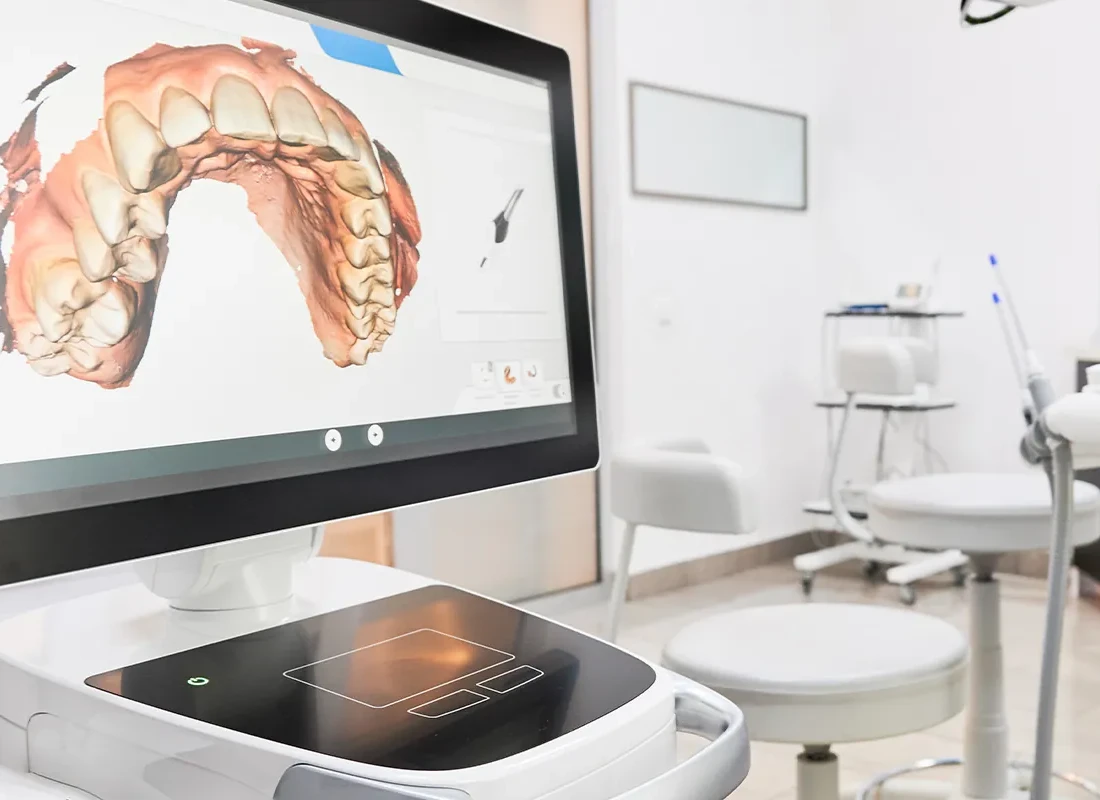
The iTero scanner records the shape of your teeth with a small handheld camera rather than a tray of impression material. The scan appears on screen straight away, so we can show you what we are looking at, and it is what we use to plan Invisalign treatment.
Zoom is an in-office whitening treatment carried out in a single visit, using a professional-strength gel activated by a light. How much your teeth lighten depends on the type of staining, so we check whether it suits your smile before recommending it.
Reviewing images together can make it easier to understand a recommendation. Ask us to explain what an image shows and how it affects your treatment options.
Read more about dental crowns and dental X-rays.