
Table of Contents
- Table of contents
- The Reason Jawbone Diminishes Following Extraction
- Outcomes When You Forgo The Graft
- Gradual Shifts You May Notice Over Time
- Implications For Future Implant Placement
- How A Dental Bone Graft Functions
- Situations Where Grafting Carries Greater Weight
- Protecting Your Options For Tomorrow
- Sources
What actually occurs if you decline the graft? Once a tooth comes out, your body gets to work sealing the wound and gradually restoring the area. Plenty of patients recover without complications, but the critical factor is how much jawbone diminishes while the socket fills in. In certain cases, allowing the extraction site to heal naturally without bone grafting can result in reduced bone volume and altered gum shape over time.
##KeyTakeaways
-
The bone surrounding the former tooth root typically reshapes itself and may shrink in both width and height during recovery.
-
A diminished ridge can restrict room for a future implant or necessitate extra preparatory procedures.
-
Not every extraction automatically calls for grafting—tooth location plays a significant role.
-
Grafting is often described as reserving space so fresh bone can develop in an area that might otherwise collapse.
-
Bone remodeling can persist for months, even after surface gum tissue appears fully healed.
Table of contents
- Key Takeaways
- The Reason Jawbone Diminishes Following Extraction
- Outcomes When You Forgo The Graft
- Gradual Shifts You May Notice Over Time
- Implications For Future Implant Placement
- How A Dental Bone Graft Functions
- Situations Where Grafting Carries Greater Weight
- Protecting Your Options For Tomorrow
- Sources
The Reason Jawbone Diminishes Following Extraction
Your tooth root and the bone encasing it function as an interconnected unit: the root activates the ridge, and the ridge anchors the root. Once that root disappears, your body no longer requires identical bone architecture in that precise location. The socket closes up, but the ridge frequently reshapes through natural remodeling. Dentists sometimes refer to socket preservation as a strategy employed when maintaining ridge dimensions matters for future treatment.
Outcomes When You Forgo The Graft
The extraction site will still heal, but the ridge may wind up smaller than it was immediately after the tooth came out. Whether that difference matters depends entirely on your future plans. If an implant isn’t on your radar and the spot isn’t in a cosmetically prominent area, a reduced ridge might be inconsequential. However, if you’re considering an implant down the road or you care about how your gum contour looks, preserving greater ridge volume simplifies later treatment planning.
Gradual Shifts You May Notice Over Time
Bone and gum alterations tend to unfold slowly. Over the following months, clinicians typically monitor several predictable shape changes. When a socket heals without added graft material, common remodeling patterns include:
-
The ridge may narrow, leaving less room for an implant post.
-
The ridge may lose vertical height, potentially affecting how a replacement tooth aligns with adjacent teeth.
-
Gum contour can flatten out, which tends to be more apparent for front teeth.
-
The altered shape may trap food differently than before.
-
Denture or partial fit can shift as the ridge continues remodeling.
Implications For Future Implant Placement
This represents a primary reason grafting enters the conversation. Dental implants generally demand sufficient bone volume and density to support the post and maintain stability. Mayo Clinic points out that when the jawbone lacks adequate thickness or proves too soft, grafting may be necessary before implant surgery. If you pass on grafting initially and later opt for an implant, an assessment can determine whether enough bone remains. If not, grafting might be recommended at that stage to rebuild width or height. The practical distinction is that delayed grafting can become more complex if significant bone has already disappeared.
How A Dental Bone Graft Functions
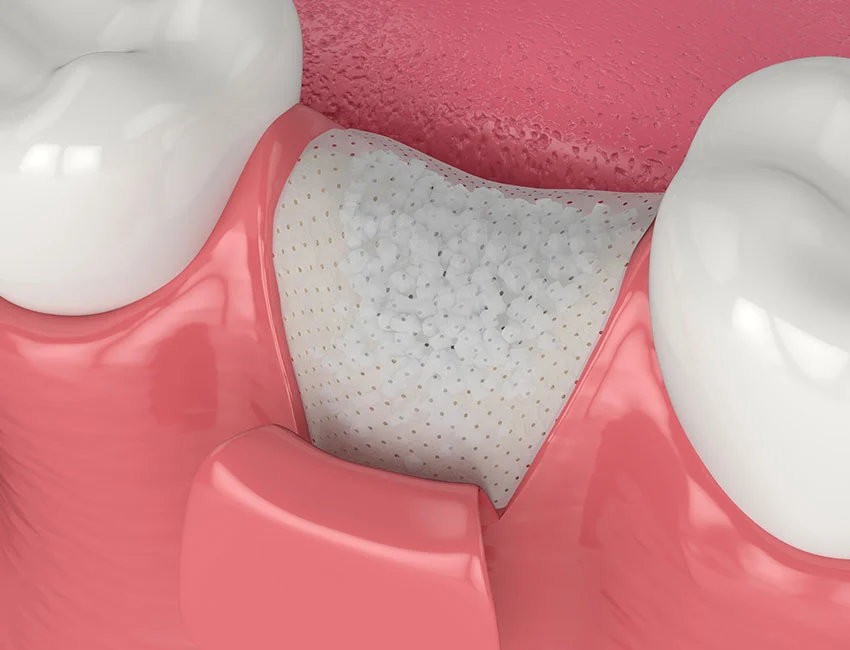
A dental bone graft involves positioning graft material into an area of missing or thinning bone—including a fresh extraction socket—to serve as scaffolding for new bone development. Cleveland Clinic explains that dental bone grafts can fill an empty tooth socket following extraction and boost jawbone volume and density. Graft materials come from various sources, including the patient’s own body, human donors, animal tissue, or synthetic alternatives. Colgate outlines multiple graft material categories and describes grafting as a method to restore bone volume when support is required for upcoming restorations.
Situations Where Grafting Carries Greater Weight
Certain circumstances place extra emphasis on ridge preservation. Grafting often comes up more frequently for front-tooth extractions because even minor bone and gum contour changes become noticeable in the smile zone. It may also be discussed when the outer socket wall is thin, since thinner bone tends to remodel more dramatically during healing. When prior bone loss from periodontal disease or infection has already occurred, protecting what remains becomes a priority. Grafting is likewise commonly considered when an implant is planned and available space or bone dimensions are borderline. Generally, clinicians weigh grafting more carefully in higher-risk extraction situations where maintaining ridge shape could streamline future treatment.
Protecting Your Options For Tomorrow
Declining a graft doesn’t mean your mouth won’t heal properly. The main tradeoff involves how much ridge architecture you retain as the socket closes, which can influence implant planning, denture fit, and gum aesthetics later on. If maintaining bone volume aligns with your long-term goals, that’s precisely where bone grafting after extraction comes into play.
Sources
All content is sourced from reputable publications, subject matter experts, and peer-reviewed research to ensure factual accuracy. Discover how we verify information and maintain our standards for trustworthy, reliable content.